



The "diseases of civilization" are familiar to every modern person - difficult-to-treat allergies, frequent ARVI, runny noses and bronchitis, chronic fatigue and weakness, gastrointestinal problems, abdominal pain.Obsessive-compulsive symptoms force you to change your lifestyle and cause a lot of discomfort, which is often the reason for multiple visits to the doctor.Treatment ends, but symptoms remain.
What could such violations indicate?
Poor health, increasing symptoms, unexplained manifestations of various body systems (respiratory, immune, neurological, digestive, etc.) are often "attributed" to the hectic pace of modern life, constant emotional and physical overload, which leads to general fatigue and weakened immunity.In fact, there are many reasons for this, and often this discomfort is caused by just one negative factor, such as a worm infection.In order to accurately determine the cause of discomfort and find out whether a parasitic infection is present, you need to see a doctor - a therapist, gastroenterologist or immunologist-allergist.
If the presence of parasites is suspected as the cause of the disease, your doctor will perform a parasite test.There are several tests available to determine helminthiasis.Most treatments are very simple: Choose a specific deworming medication.If the problem is ignored, the presence of internal parasites can lead to serious illness and sad consequences.
Symptoms of Parasitic Infection in Adults
Most adults associate worm infections with children, and there is an explanation for this established belief: helminth infections are indeed common in childhood because young children may not follow hygiene rules, belong to large groups of children, etc.However, helminthiasis also occurs in adults!Additionally, parasites in the body can cause symptoms that non-medical people would never associate with a worm infection.
For example, parasites may contribute to the development of allergies because they themselves (and their metabolites) are allergens, and they also disrupt the function of immune defense mechanisms, leading to reduced immunity.Various allergic reactions (runny nose, watery eyes, rash, swelling, diarrhea) occur to familiar foods, pollen, household dust, and can worsen rapidly.Against the background of changes in the immune system, acute respiratory viral infections occur frequently and general health deteriorates.
In terms of the digestive system, when infected with parasites,
- Pain in the upper abdomen near the navel,
- Frequent bloating
- diarrhea,
- Painful cramping in the lower abdomen,
- constipate,
- itching
These symptoms may indicate a roundworm infection, which lives primarily in the small intestine, which is why the unpleasant feelings listed are experienced.Painful cramping in the lower abdomen, constipation, and anal itching are more common when pinworms are infected because pinworms are only found in the large intestine.All helminth infections can lead to impaired appetite that not only disappears but worsens.
Some helminth infections, such as echinococcosis and opidiosomiasis, are asymptomatic.
Complications of untreated helminthiasis include the following (some are listed):
- Anemia due to impaired intestinal absorption of nutrients, vitamins, and proteins; studies have shown that even mild helminth infections can cause this condition;
- Intestinal obstruction - mechanical obstruction of the intestines, most common in children under 10 years of age, but also occurs in adults worldwide; intestinal obstruction can lead to death;
- Bronchial obstruction (ascariasis) and corresponding manifestations of the respiratory system;
- Jaundice (with ascariasis) due to blockage of the bile ducts.
Important!Adults can become infected by eating parasites from food that has not been heat treated (fish, meat) or from vegetables that have not been washed enough.Dangerous worms can enter the human body through pets (dogs, cats, turtles, etc.).This is why even adults need to undergo regular testing to detect worm infections, especially if persistent symptoms of the digestive system are observed.
Diagnosis of helminthiasis
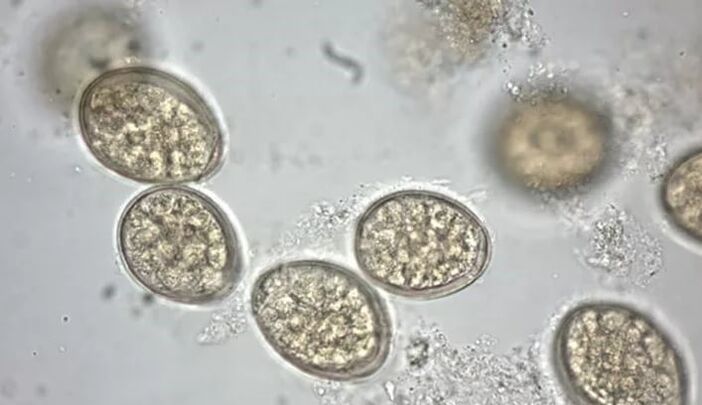
Some helminth infections are extremely difficult to detect in stool due to the peculiarities of the parasite life cycle, such as ascariasis, in which case it is necessary to measure helminth antibodies in the blood.The analysis is informative (and accurate) when it comes to identifying pinworms.
Blood test to determine worm antibodies
The purpose of these studies is to determine whether pathogens such as roundworms and Toxocara are present in the body.These tests are accurate and allow you to determine whether a parasitic infection is present.
Important!After treatment is completed, repeated studies are needed to verify its effectiveness (elimination of parasites).
Frequently performed tests (specific tests for worm infections as well as general and biochemical blood tests) can help identify more dangerous health problems that require immediate treatment and can be fatal.For example, combined with worm infection testing, testing can be done to identify hidden viral infections that cause serious damage to the body and weaken the immune system, such as Epstein-Bar virus, cytomegalovirus, and others.That is why any test prescribed by the doctor can provide him with important information about the reasons for the patient's poor health and allow him to promptly start targeted treatment.
Clinical treatment of helminthiasis
Although unpleasant, most helminthiasis can be treated with the use of special medications.Modern anthelmintic drugs are well tolerated, do not cause serious side effects, and are chosen individually by a doctor based on the medical condition if a treatment regimen is followed.Strict compliance with the medication regimen ensures complete elimination of internal parasites.
However, the treatment didn't end there.It is necessary to eliminate the consequences of helminth infection from the body, so the doctor may prescribe drugs to improve digestion (intestinal adsorbents, probiotics, anti-inflammatory drugs), anti-allergic drugs, expectorants, anti-blood drugs (iron supplements), vitamin-mineral complexes, etc.I would like to note in particular that treatment is always strictly individual and depends on the physical characteristics of each patient, so it is best to carry out treatment under the supervision of a doctor.
The clinic offers patients the unique opportunity to utilize herbal medicine to further improve their physical health.A gastroenterologist (who is also an herbalist) will individually select an herbal mixture based on herbs with anti-inflammatory, anthelmintic, and anti-allergenic properties.Herbal courses help normalize digestion and eliminate discomforts - heartburn and burping, bloating and bowel disturbances, the recovery and support of the body make the patient as comfortable as possible.The clinic also uses homeopathic remedies as supportive care, as these medicines have mild, complex effects on various body systems.